

If you work in IT or sit in front of a computer screen for 8 to 10 hours a day, you are likely familiar with that dull ache at the base of your neck or between your shoulder blades.
In bustling tech hubs like Viman Nagar, Kharadi, and Kalyani Nagar, thousands of young professionals spend their workdays bent over laptops, monitors, and smartphones. What often starts as mild stiffness after a long shift can gradually develop into a chronic spinal condition commonly known as “Tech-Neck.”
While taking a quick break or stretching offers temporary comfort, ignoring persistent neck pain can mask underlying disc and nerve issues. This detailed guide explains what Tech-Neck actually is, how prolonged sitting strains your cervical spine, and why advanced 3T MRI technology is essential for accurate early diagnosis.
What is “Tech-Neck” and How Does It Strain Your Spine?
“Tech-Neck” is a modern overuse strain caused by repeatedly tilting your head downward to view digital screens for extended periods.
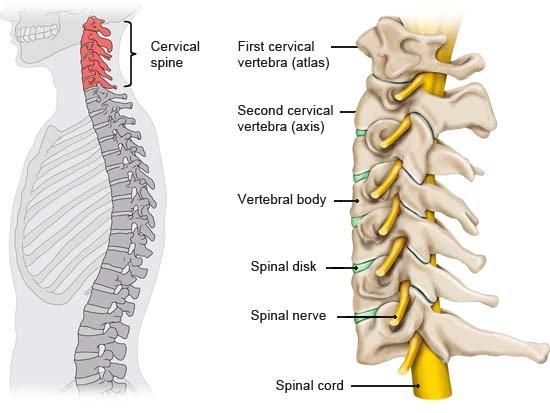
The Physics of Head Posture
In a neutral, upright posture, an adult human head weighs approximately 4.5 to 5.5 kilograms. However, as you tilt your head forward to look at a laptop or phone screen, gravity increases the effective weight supported by your cervical spine:
- 15-Degree Tilt: Exerts roughly 12 kilograms of strain on neck muscles and discs.
- 30-Degree Tilt: Increases the burden to about 18 kilograms.
- 45-Degree Tilt: Subjects your cervical spine to a massive 22 kilograms of force — nearly four times the normal structural load!
How Prolonged Strain Affects Spinal Structures
When your neck remains locked in a forward posture hour after hour:
- Muscle Overwork: The posterior neck muscles and upper trapezius remain continuously contracted, causing local inflammation and spasms.
- Disc Compression: Increased pressure on the intervertebral discs accelerates disc dehydration (loss of moisture content) and thins the protective cushioning between vertebrae.
- Nerve Impingement: Over time, dehydrated or bulging spinal discs can press against nearby spinal nerve roots, sending radiating pain down into your shoulders, arms, or fingers.
Warning Signs and How Symptoms Progress
Tech-Neck rarely develops overnight. It usually progresses through three distinct stages before causing severe discomfort:
- Stage 1 (Mild Muscle Fatigue): Periodic neck stiffness or upper back tightness at the end of a long workday.
- Stage 2 (Persistent Ache & Tension): Daily soreness, reduced neck mobility, and frequent tension headaches originating near the base of the skull.
- Stage 3 (Nerve Involvement): Sharp, shooting pain radiating into your shoulder blades, accompanied by tingling, numbness, or a “pins-and-needles” sensation in your fingers while typing.
If you notice any of these symptoms lasting more than two weeks, it is important to seek a proper medical evaluation.
Why a 3T MRI is Critical for Early Spine Diagnostics
When conservative remedies like rest, hot compresses, or physical therapy fail to relieve chronic neck discomfort, your doctor may recommend magnetic resonance imaging. This is where high-field 3T MRI technology becomes invaluable.
A 3T MRI uses a stronger magnetic field than standard 1.5T machines, generally producing sharper and more detailed images for complex spinal and neurological evaluation.
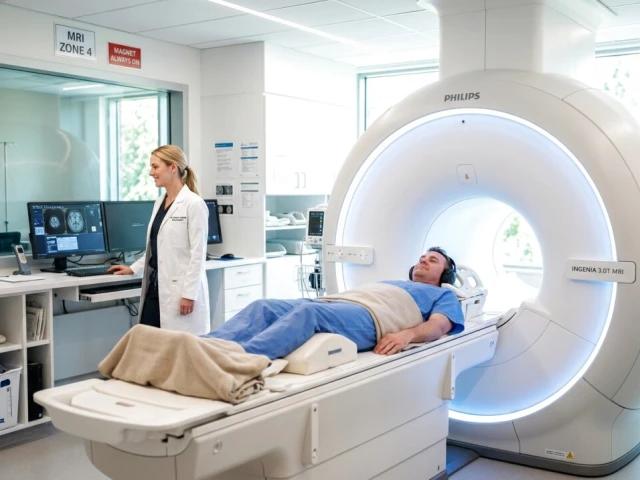
Key Clinical Advantages of 3T Magnetic Strength
- Microscopic Detail Capture: High-field imaging delivers sharper resolution than standard 1.5T scanners, making it ideal for examining fine spinal nerve roots and soft tissues.
- Early Disc Dehydration Detection: Lower-power scanners may miss the initial stages of disc moisture loss or minor disc bulges. High-field 3T imaging captures early degenerative changes before permanent structural damage occurs.
- Exact Nerve Root Identification: If a disc bulge is impinging on a nerve, a 3T scan pinpoints the precise location and severity of compression, allowing your doctor to design a targeted treatment plan.
- Faster Examination Times: Because the 3T magnet captures signals efficiently, a typical scan takes between 20 to 45 minutes depending on the body part examined.
What Patients Should Know Before Their Spine Scan
Undergoing your first spine scan is a straightforward, painless process:
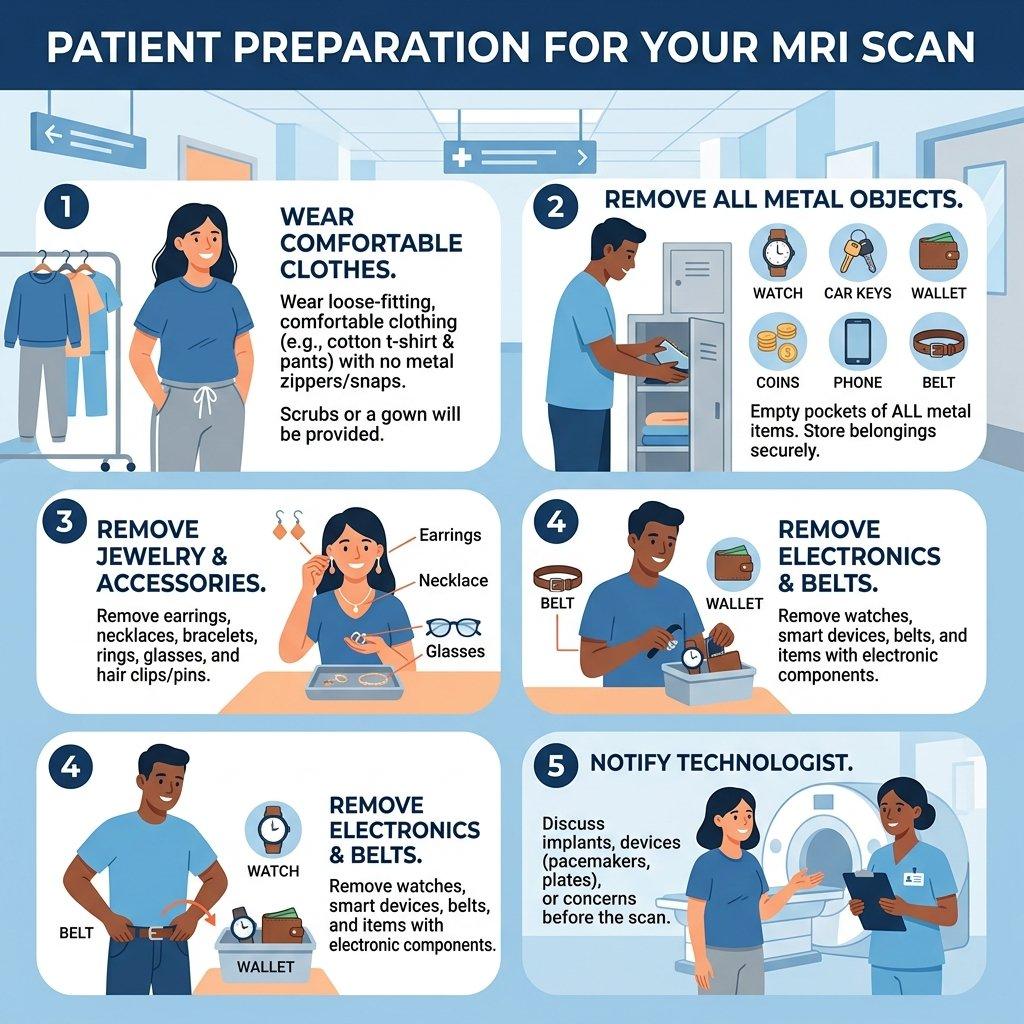
- Remove All Metallic Items: Magnetic fields attract metal. Leave watches, jewellery, belt buckles, hairpins, and keys outside the examination room.
- Disclose Medical Implants: Always inform the team of any implants or pacemakers before booking your scan.
- Patient-First Comfort: Modern diagnostic centres train their teams to slow down and support anxious or first-time scan patients throughout the process.
- Radiologist Verification: Every scan is reviewed and cross-checked by a qualified radiologist before the final report is completed.
- Fast Digital Reports: Reports are digital by default, allowing you to share them instantly with your treating doctor, with typical report turnaround times within 3 to 4 hours.
How to Select a Reliable Diagnostic Centre in Viman Nagar
Selecting the right facility for your scan ensures accurate results and a stress-free experience:
- Comprehensive Imaging Capabilities: Look for a centre that brings high-field 3T MRI, radiology, and pathology services under one roof so you don’t have to make separate trips across town.
- Qualified Radiologist Oversight: Confirm that every scan report is reviewed by an experienced radiologist before final sign-off.
- Convenient Location & Access: Facilities like Ayucare Diagnostic Center, located at Optimus (Wing B) in Viman Nagar, provide 3T MRI imaging and serve patients across Viman Nagar, Kharadi, Kalyani Nagar, Yerwada, and Wagholi. See our 3T MRI pricing.
Simple Daily Ergonomic Habits to Protect Your Cervical Spine
While diagnostic imaging helps identify structural issues, simple ergonomic habits can protect your spine every day:
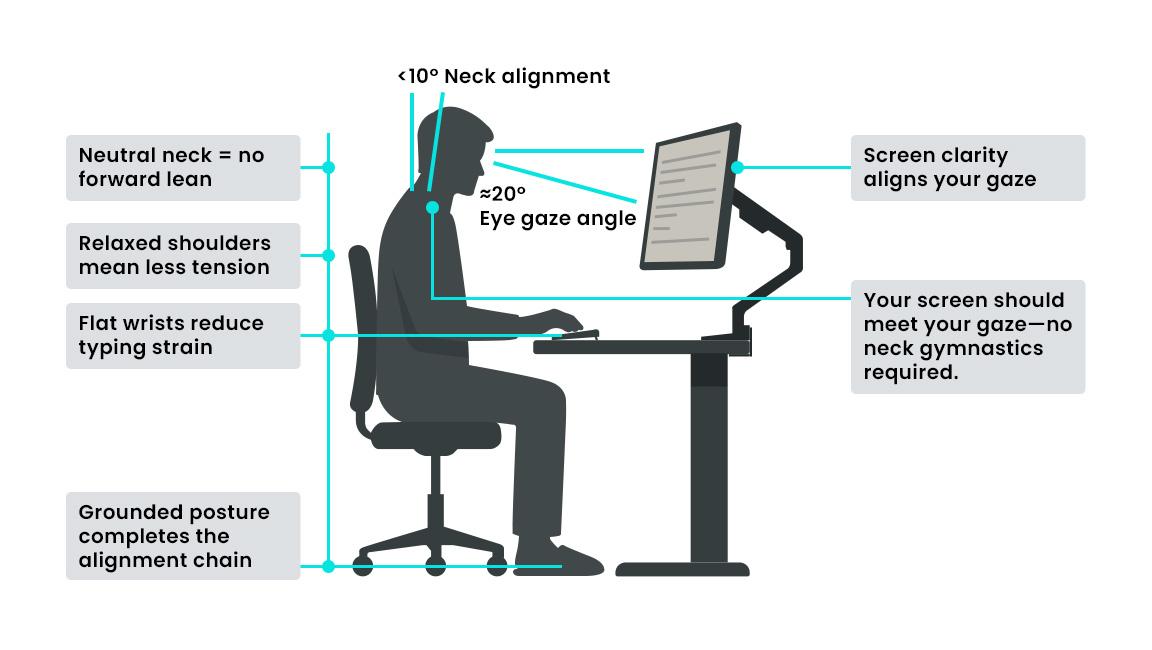
- Adjust Screen Height: Position your monitor so the top third of the display aligns with eye level, preventing downward head tilt.
- Follow the 30-Minute Stretch Rule: Stand up, roll your shoulders back, and perform gentle neck tilts every 30 to 45 minutes during long work sessions.
- Optimize Chair Ergonomics: Sit upright with your feet flat on the floor, keeping your lower back firmly supported against your seat lumbar cushion.
- Limit Phone Hunches: Hold your smartphone up closer to eye level rather than dropping your chin toward your chest.
Frequently Asked Questions (FAQs)
Q1: Does a spine MRI scan involve any radiation exposure?
No. An MRI scan uses magnetic fields and radio waves rather than ionizing X-ray radiation.
Q2: How long does a 3T spine MRI scan take?
A typical MRI scan takes between 20 and 45 minutes, depending on the body part being examined.
Q3: How soon will I receive my MRI report?
MRI reports are reviewed by a qualified radiologist and are usually available digitally within 3 to 4 hours.
Q4: Can Tech-Neck be managed if caught early?
Yes. Early-stage muscle strain and minor disc bulges often respond well to ergonomic corrections, targeted physical therapy, and lifestyle adjustments once accurately diagnosed.
Conclusion
Prolonged screen time is a reality for modern IT professionals, but living with chronic neck pain does not have to be. Understanding Tech-Neck and seeking early evaluation with a high-resolution 3T MRI in Viman Nagar gives your doctor the clear insights needed to address nerve compressions and disc issues early.
Need Assistance Scheduling Your Spine Scan?
If you have a doctor’s referral for an MRI scan or need guidance regarding scan preparation:
- Facility: Ayucare Diagnostic Center
- Address: Optimus, Wing B, Viman Nagar, Pune - 411014
- Helpline: +91 84829 21085
- Areas Served: Viman Nagar, Kharadi, Kalyani Nagar, Yerwada, Wagholi, and across Pune