
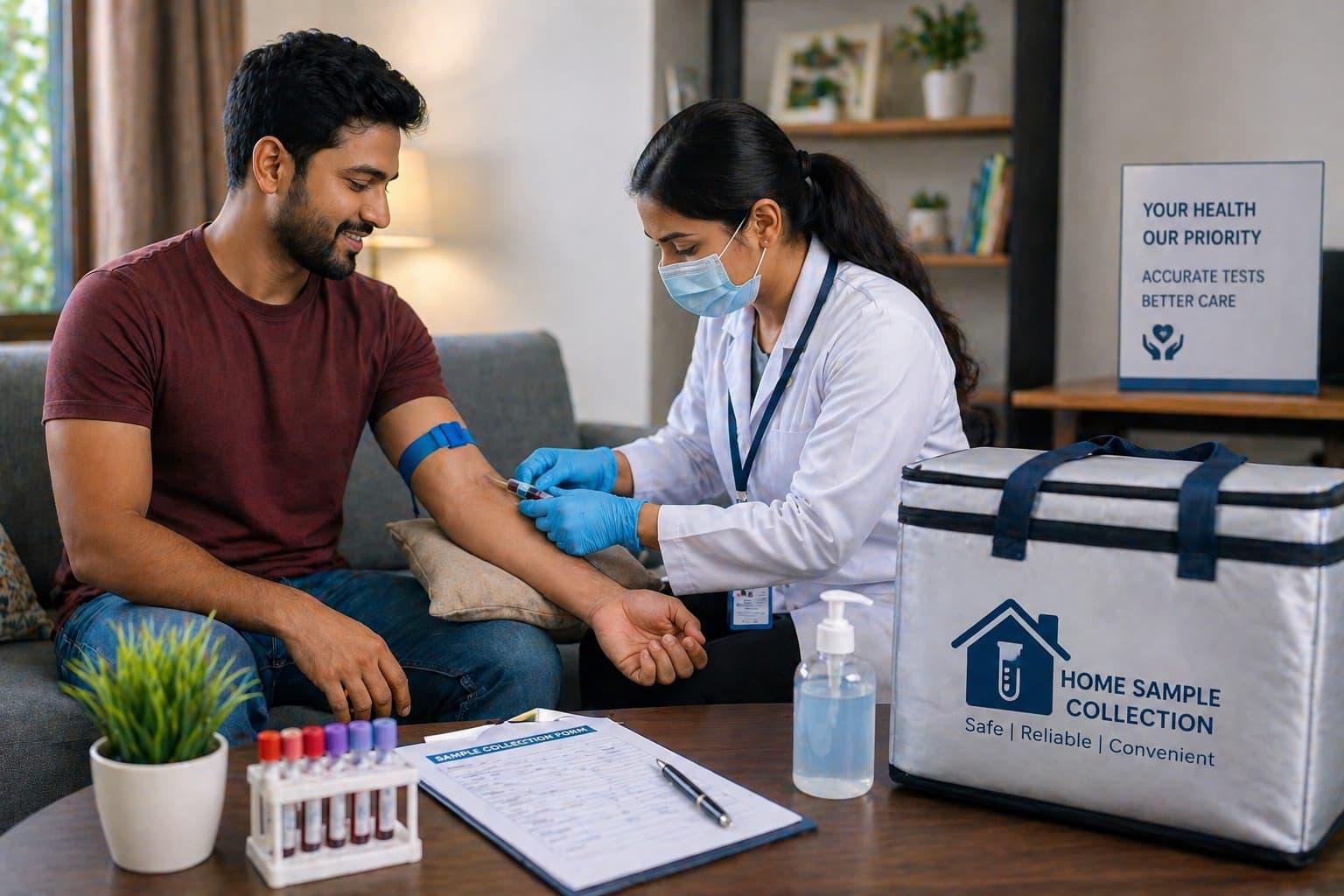
Getting a Pathology Blood Test Home Collection in Viman Nagar has changed how local families manage their health. Instead of rushing out the door on an empty stomach, battling the morning rush on Airport Road, and sitting in a crowded waiting room, you can simply open your front door to a trained technician. You get your blood drawn in your own living room and get on with your day. A few hours later, your lab report pops up on your phone.
It feels effortless. But have you ever wondered what happens to those small, colored tubes of blood after the technician packs them up and steps out of your house?
Blood is not like water or milk — it is a living, working fluid packed with active cells, proteins, and chemical messengers. The moment blood leaves your vein, those living components react to their new environment. In fact, diagnostic health studies show that more than six out of every ten laboratory mistakes happen before the sample even touches a testing machine. Medical experts call this stage the pre-analytical phase, which covers everything from how your sample is drawn to how it travels across town.
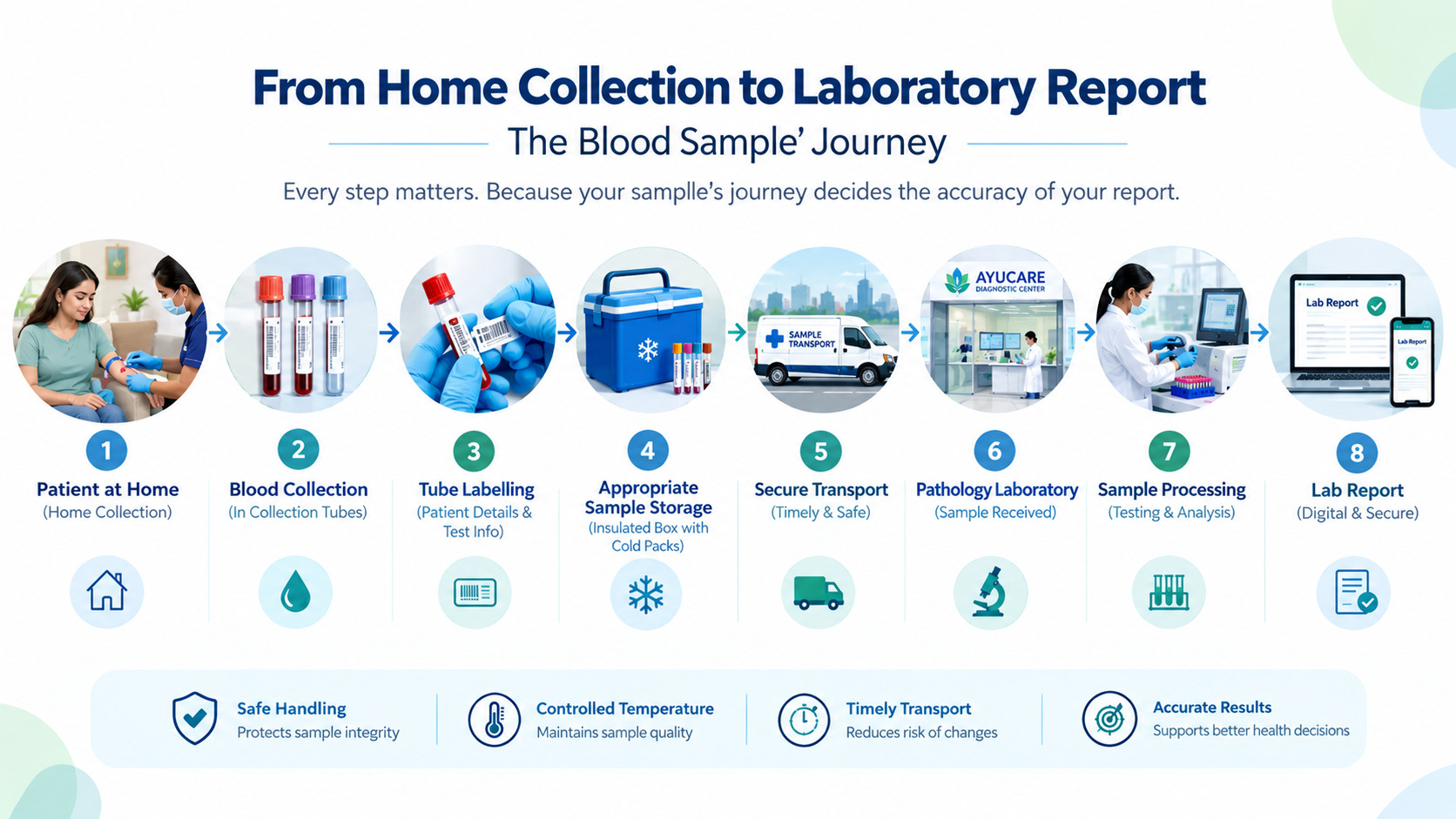
Understanding the simple science of Cold Chain Management and proper Blood Sample Handling shows why your sample’s trip through Viman Nagar, Kharadi, Kalyani Nagar, Yerwada, or Wagholi is just as crucial as the technology used to analyze it.
What Actually Happens to Blood After It Leaves Your Body?
When a phlebotomist draws your blood into a sealed vial, the cells inside do not shut down right away. They stay active for hours:
- Cells Keep Consuming Food: Red blood cells continue to eat the dissolved sugar (glucose) sitting in your blood fluid to stay alive.
- Sensitive Proteins Break Down: Natural warmth and light slowly alter sensitive hormones, vitamins, and liver enzymes.
- Cell Membranes Turn Fragile: As blood cells sit in a tube, their outer walls weaken. Any rough shaking or excessive heat can make them burst open.
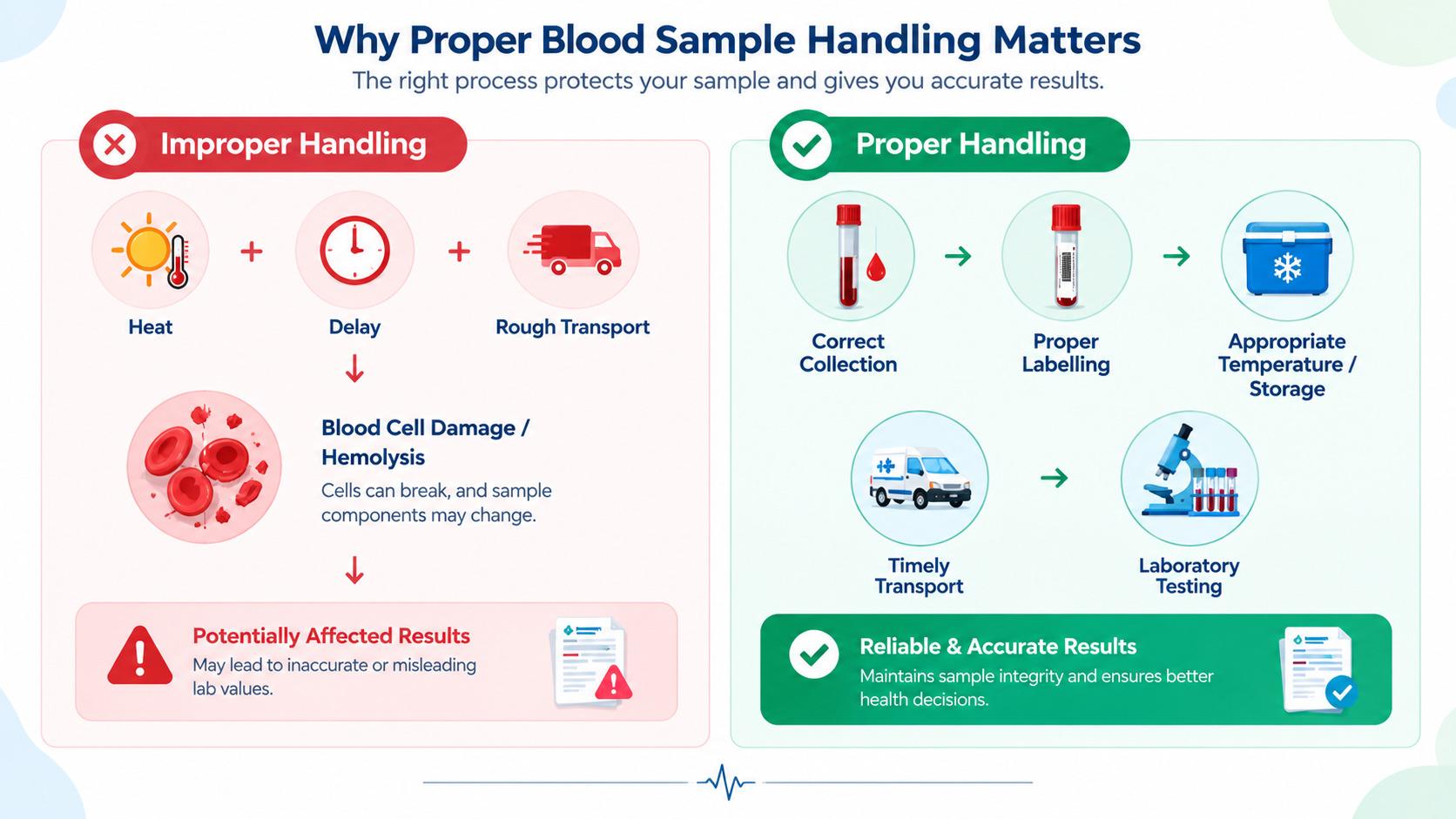
If a blood tube sits in a warm bag on the back of a motorbike during a hot Pune afternoon, these natural microscopic changes speed up. By the time that sample reaches a Pathology Lab in Viman Nagar, its chemical balance might no longer match what was actually flowing through your veins an hour earlier.
What Is “Cold Chain Management” in Everyday Language?
You might have heard the term “cold chain” used for ice cream deliveries or vaccines. In diagnostic healthcare, Cold Chain Management means keeping a biological sample within a safe, steady, chilled temperature range from the second it is drawn until it is placed on a laboratory bench.
While a handful of basic tests can sit briefly at room temperature, most routine health checks — including thyroid panels, liver profiles, lipid checks, and blood sugar tests — require continuous Sample Temperature Control. In most cases, that means keeping vials between 2°C and 8°C.
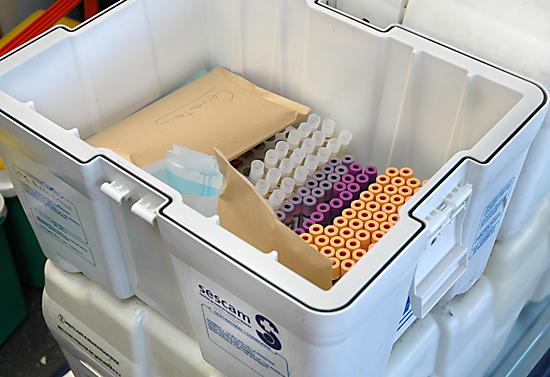
- Home Sample Collection in Viman Nagar
- Insulated Transport KitChilled gel packs maintain 2°C – 8°C
- Transit Through Pune Traffic
- Lab Arrival & Testing
The Three Steps of a Safe Cold Transport System:
- Insulated Thermal Carrying Bags: Heavy-duty, padded transport boxes block outside heat from reaching the collection vials.
- Refrigerated Gel Packs: Cool gel bricks line the inside of the carrier. They absorb ambient heat without freezing the blood solid (because freezing tears red blood cell walls apart).
- Punctual Delivery Windows: Organised routes ensure that samples collected during a Phlebotomist Home Visit arrive at the laboratory bench quickly — usually within two to four hours.
How Heat and Delays Distort Your Test Results
When temperature controls slip during a Pathology Test at Home, two common biological problems can throw off your test results:
Falsely Low Blood Sugar Readings
If you are checking your Fasting Blood Sugar or taking a diabetes monitoring panel, temperature control is vital.
- The Problem: Living red blood cells in an uncooled tube keep eating glucose at a rate of roughly 5% to 7% every hour.
- The Outcome: If a sample collected during a Home Collection Blood Test sits in a warm bag for three hours without cooling or specific preservatives, the lab equipment will measure far less sugar than was in your body. Your report might make you look hypoglycemic when your real blood sugar was completely healthy.
Spilled Potassium and Hemolysis (Cell Bursting)
Hemolysis happens when fragile red blood cells rupture, dumping their internal contents into the clear liquid part of your blood.
- The Problem: Direct sunlight, high summer heat, or severe bumps during transport can cause cell walls to snap open.
- The Outcome: The inside of a red blood cell contains nearly twenty times more potassium than the surrounding liquid. If cells rupture in the tube, your lab report will show an alarming jump in potassium levels. A doctor reading that flawed report might suspect kidney trouble or heart risks, leading to unnecessary worry and repeat needle pricks.
The Role of a Trained Phlebotomist During a Home Visit
A sturdy cold bag is only half the battle; the skill of the person collecting your blood matters just as much. When you book a Blood Test Home Collection in Viman Nagar, a trained technician follows strict safety steps to protect Sample Integrity:
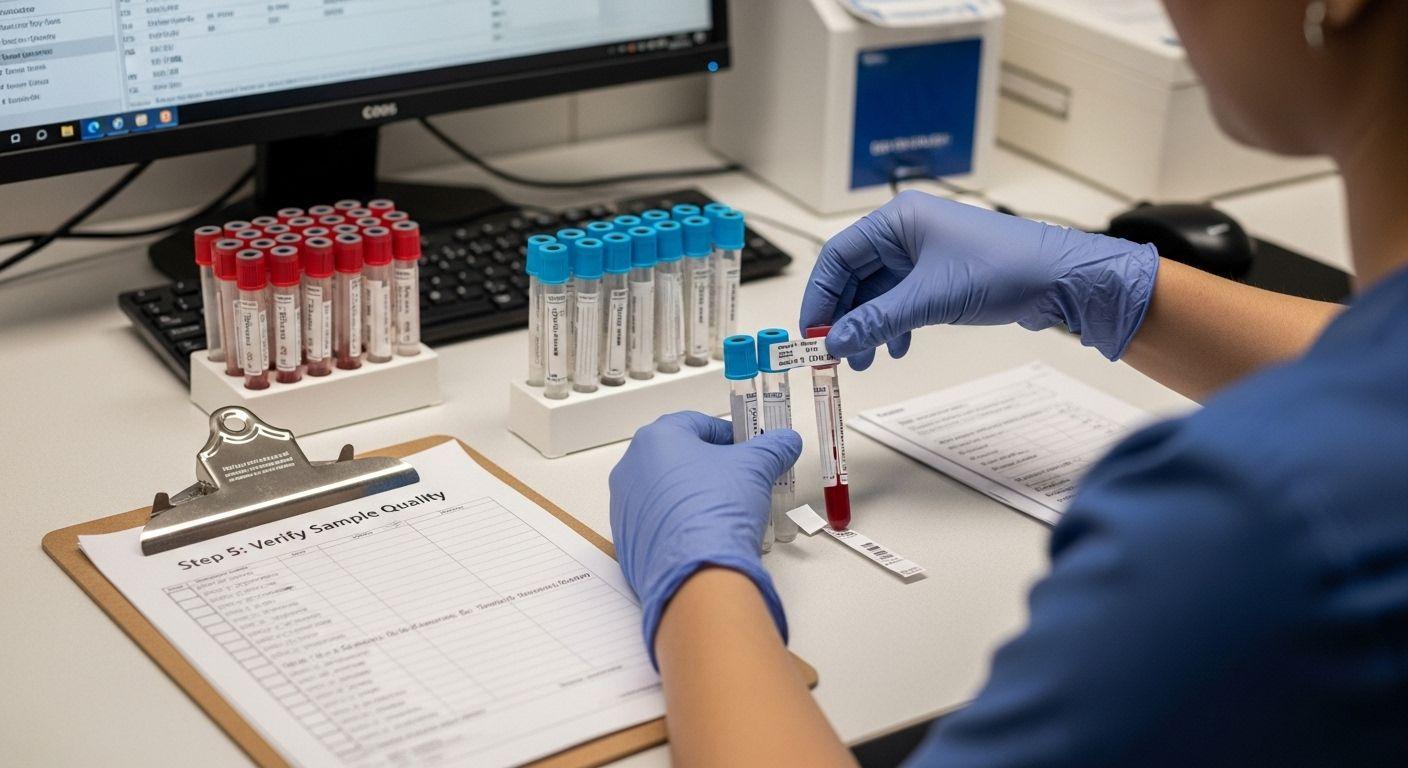
- Filling Tubes in the Right Order: Different collection tubes hold different chemical preservatives or blood-clotting agents. A trained phlebotomist fills tubes in a specific order so that additives from one tube never spill into the next.
- Gentle Mixing (Not Shaking): Right after drawing blood, the technician gently turns the tube upside down five to eight times. This mixes the protective chemicals with your blood smoothly without damaging fragile cells.
- Immediate Bedside Labeling: Your name, age, and test details should be verified and attached to the tube while the technician is still sitting beside you, before the vial goes straight into the chilled carrier.
Moving Samples Safely Across Pune Neighborhoods
Home collection routes often cover wide residential stretches. A single phlebotomist’s morning schedule might start with a Home Sample Collection in Kalyani Nagar, move to a patient in Yerwada, drop by a home in Kharadi, and pick up another sample during a Home Blood Collection in Wagholi before returning to a central Pathology Lab in Pune.
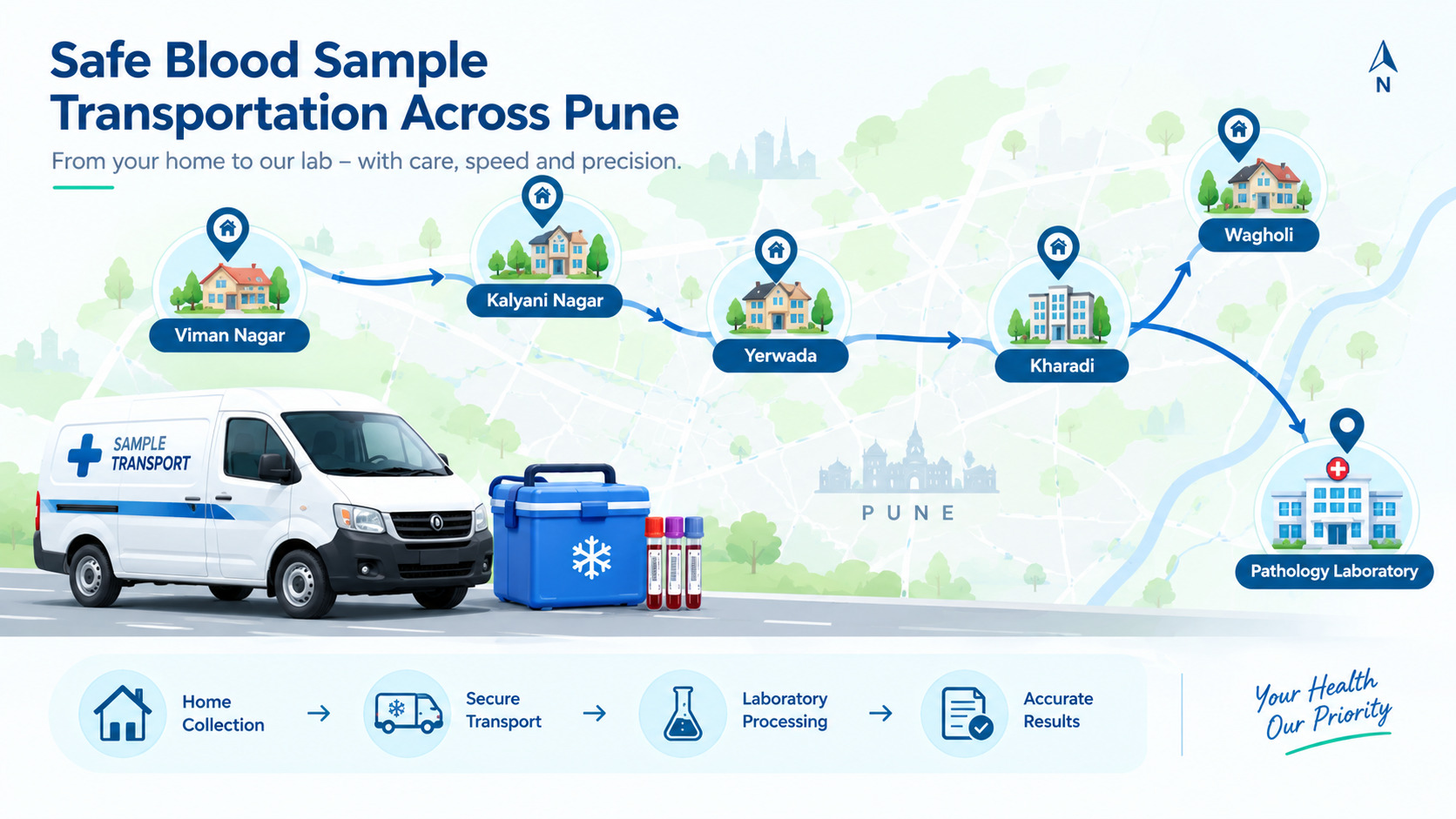
Because traffic along Nagar Road and surrounding lanes can be unpredictable, having a reliable cold box setup ensures that whether you book a Blood Test in Yerwada, a Blood Test in Kharadi, or a routine checkup in Viman Nagar, every sample stays at the exact same cool temperature from start to finish.
Simple Things Patients Can Check During a Home Blood Draw
Knowing what standard sample handling looks like gives you peace of mind when booking Home Diagnostics in Viman Nagar.
Quick Quality Checklist for Patients:
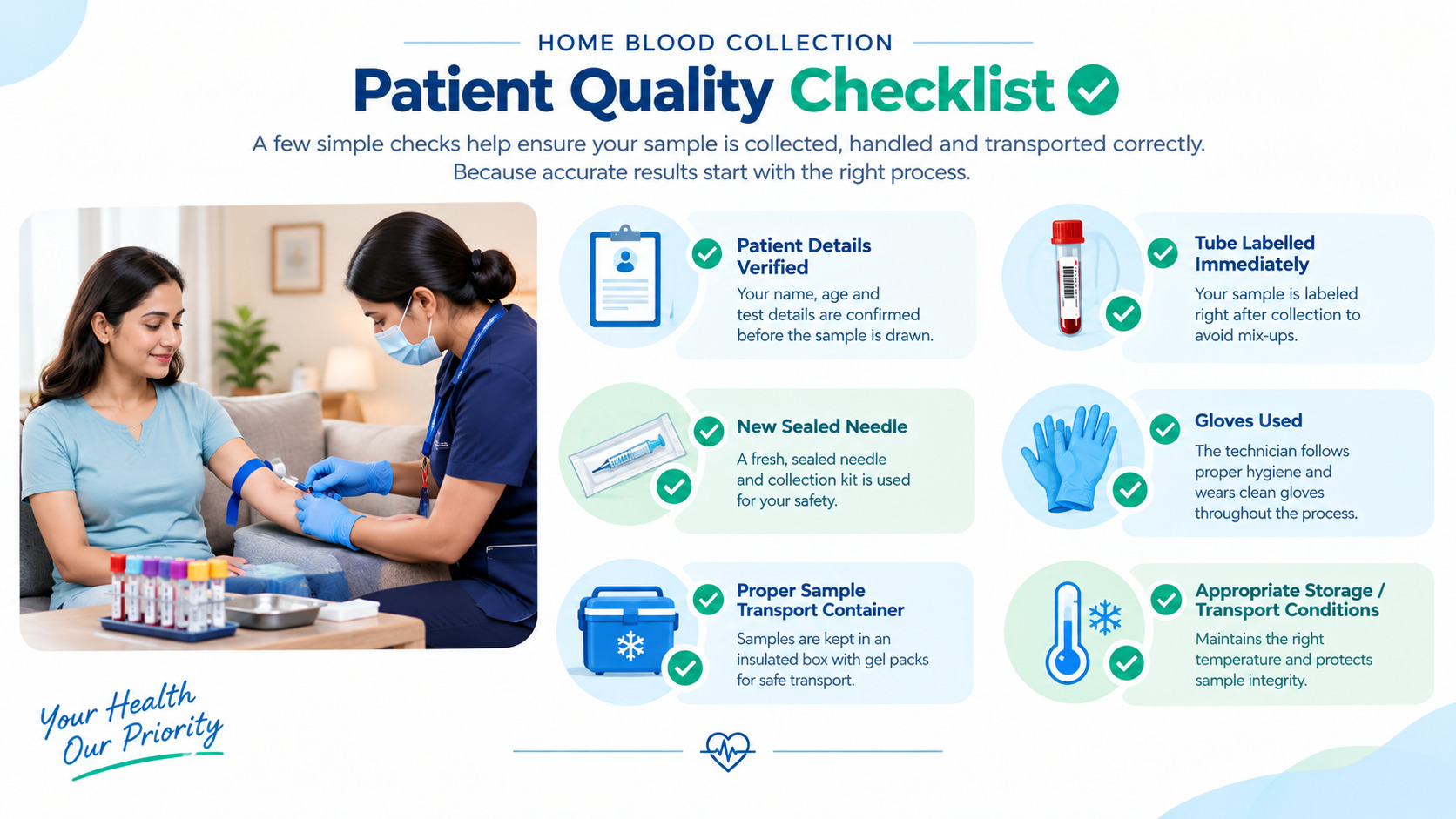
- Label Check: Make sure the technician confirms your full name and details on the tube label right after drawing your sample.
- Proper Storage Gear: Look for an insulated, structured thermal box with cool gel packs inside — not a plain plastic pouch or an open cloth kit.
- Hygiene Basics: Confirm that the needle comes out of a brand-new, sealed paper wrapper, and that the technician wears clean gloves.
If you are looking for a reliable local reference, Ayucare Diagnostic Center — located at Office No 2, Wing B, 1st Floor, Optimus, Opp. Lunkad Queensland, Viman Nagar, Pune – 411014 — is an established local Diagnostic Centre in Viman Nagar. Working with a well-regarded local center helps ensure that home draws across Viman Nagar, Kharadi, Kalyani Nagar, and nearby areas follow proper temperature and transport protocols.
Frequently Asked Questions (FAQs)
Q1: Why do blood collection tubes need to stay chilled during travel?
Blood cells remain active inside collection tubes. Keeping the sample between 2°C and 8°C slows down cellular activity, stopping cells from consuming sugar or breaking down sensitive enzymes before the laboratory equipment can analyze them.
Q2: What happens if my blood sample gets too warm in transit?
Warm temperatures can cause red blood cells to burst open (a condition called hemolysis) or consume glucose. This can lead to inaccurate lab readings, such as falsely high potassium levels or falsely low blood sugar readings.
Q3: How long can a blood sample safely wait before reaching the lab?
Most routine blood samples should reach the processing facility and be prepared for testing within 2 to 4 hours of being drawn from your arm.
Q4: How can I tell if the phlebotomist is storing my sample correctly?
Check that the technician places your labeled vials upright into a structured, insulated cold bag fitted with gel cool packs before leaving your home.
Conclusion
A routine blood test offers a clear window into your health, helping doctors check organ function, track glucose, or fine-tune treatment plans. But the reliability of your report depends on more than just high-tech lab equipment — it relies heavily on how carefully your blood is handled along the way.
By choosing a service that uses proper Cold Chain Management, safe Blood Sample Transportation, and attentive phlebotomy standards, you can feel confident that your Blood Test in Viman Nagar delivers clear, trustworthy answers every time.
Ready to Book a Home Blood Test?
Get accurate, reliable lab testing with proper sample care right at your doorstep. To schedule a Pathology Blood Test Home Collection in Viman Nagar or inquire about health packages:
- Ayucare Diagnostic Center
- Phone: +91 84829 21085
- Address: Office No 2, Wing B, 1st Floor, Optimus, Opp. Lunkad Queensland, Viman Nagar, Pune – 411014
- Areas Served: Viman Nagar, Kharadi, Kalyani Nagar, Yerwada, Wagholi, and across Pune.
- Services: Pathology Lab Tests, 3T MRI, CT Scan, Sonography, ECG, and Health Checkups.